Reviews by

Shot in the Dark


Tim Anderson, the programming manager of my local independent cinema, Enzian Theater, described this as “DIY cinema at its most unhinged: raw, reckless, positively brilliant, possibly deranged and definitely not something you’ll see anywhere else.” That short description suits David Ullman‘s lo-fi fan adaptation of James O’Barr’s graphic novel The Crow just about perfectly. One of the funnier aspects of this viewing is that I’ve never actually seen Alex Proyas‘s big-budget adaptation, nor have I ever read the graphic novel. Which means, going forward, this will always be my baseline for anything Crow-adjacent. And frankly, I don’t think that’s such a bad starting point. This sits at an interesting moment in time. DIY filmmaking had carved out a genuine scene in the 1990s—particularly within horror, sci-fi, and cult film circles. Microcinema was never broadly popular, but it found its footing within specific subcultures, driven largely by access. Ullman’s film became a genuine hit within its own niche, Crow-centric corners of that world—but it’s worth noting that there’s actual artistic merit behind the project, too. Despite being made for next to nothing by a bunch of 14 year old boys, it never quite feels like the amateur home movie you’d be led to believe it is. The editing, framing, texture, and night imagery do a lot of heavy lifting, sure, but the film’s strongest asset is its genuine sincerity—the palpable desire to make something great, regardless of the resources at hand. It’s easy to poke fun at this, and I think that’s part of the appeal—the drug-dealing psychos are all played by prepubescent boys, after all—but in an age where AI “filmmakers” crop up faster than you can mark them as spam, David Ullman’s film is a breath of fresh air.
Magical Escapism
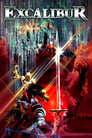
By 1981, any screen rendition of the Arthurian legends tended to arrive as either sanitized pageantry or literary prestige adaptation. John Boorman—wide-eyed and entranced by the stories since childhood—came at it from a different angle entirely. He’s on record stating the endeavor took him a decade to fully bring to life, and I think Excalibur perfectly captures that obsessive, mythical drive to render the grandness and enormity of the legend in both a physical and spiritual sense. This is a film with many faults—one I could probably critique at length. The pacing is shoddy, performances are either underdelivered or squandered, the audio mixing is poor, and it tries to do far too much. And yet I find myself mystified, resoundingly swept up in Boorman‘s epic. Behind every glittering plate of armor, every gold-bathed prop, every opulent piece of set dressing, there’s a gentleness—a genuine soul-searching—that keeps breaking through. It is, probably, the one achievement even the film’s detractors tend to concede. Excalibur’s entire visual identity is built around a supernatural overexposure that pitches this world as something far removed from our own, enchanting every element on screen. The Irish locations do enormous work here too, fusing the lushness of the landscape with an almost alien amalgamation of ever-shining crowns and armor. Trevor Jones‘s score is another one of the film’s secret weapons, amplifying the mysticism and sublimity of Arthur, his knights, and the world they’ve built and lost. Paired alongside Wagner and Carl Orff, Excalibur manages to sell its grandness through sound alone. It’s far from a perfect film. I’m not a big fan of Nigel Terry’s Arthur, and the picture strains under the overwhelming weight of trying to cover so much of the legend in a single sitting. That said, however, Excalibur is a fantastical exercise in escapism—an unwieldy, deeply overburdened endeavor from Boorman in his attempt to bring the myth to life. That overly ambitious human spirit is rendered beautifully on screen.
Bad Day at Black Rock
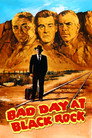
Bad Day at Black Rock marks two firsts for me—Spencer Tracy and, more significantly, John Sturges (shocking, I know). Set against the backdrop of a wounded postwar America, the film is steeped in McCarthy-era anxiety about silence, intimidation, complicity, and the deep moral cost of looking away—unmistakably shaped by the 1950s, even as its story takes place a decade earlier. Widely recognized as one of the earliest major American films to directly confront anti-Japanese racism in the wake of World War II, Bad Day at Black Rock is a morally corrosive western noir boasting considerable talent both in front of and behind the camera. Spencer Tracy won Best Actor at Cannes for his role as John J. Macreedy—the film’s moral center, and an interesting one at that. He’s not a detective, not a sheriff riding into town, not even blood-related to anyone there—he’s simply a man who refuses to be bullied into blindness in his quest to find out what happened to Komoko, a Japanese resident of the town. The supporting cast is equally strong—from Robert Ryan’s menacing Reno Smith to Ernest Borgnine’s brash, bull-headed Coley Trimble. Funnily enough, Lee Marvin turns up in a small role as Hector David, the silent, menacing figure who sizes up Macreedy throughout the film—a nice surprise after having just watched Point Blank for the first time recently. Alongside Sturges’s wonderfully suspenseful direction, William C. Mellor’s CinemaScope work is integral to the film’s entire identity. Shot on location in Lone Pine, it calls to mind Budd Boetticher’s Comanche Station and how Charles Lawton Jr. utilized the barren, rocky terrain to underscore the loneliness of its protagonist. Mellor makes the town feel constricting and suffocating, its utter isolation pressing in from every angle. There’s nowhere for Macreedy to run, and the town becomes its own special kind of hell. Bad Day at Black Rock was a fantastic introduction to John Sturges, both as a director and as an artist. The film’s influence lingers through the sheer portability of its setup, but the deeper reason it feels so current is that it remains one of the cleanest American films ever made about communal cowardice.
Badges in the Dark
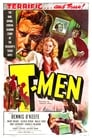
“What’s the matter, you getting the wim-wams?” I first heard of Anthony Mann‘s T-Men through TCM’s introduction to John Cromwell’s Caged—both written by Virginia Kellogg. Mann is a director I greatly admire, particularly his emotionally rich James Stewart westerns. T-Men fits snugly within the semi-documentary crime film movement that proliferated in the wake of WWII—held together by government cooperation and, hilariously, funded by organized crime. Anthony Mann and John Alton take that framework and flood it with caustic noir dread, the sober instructional posture of the police procedural sitting at direct odds with the expressionist stylization drawn from one of the defining visual partnerships of the late 1940s. That tension is precisely why the film is both fondly remembered and considered among Mann’s strongest work from his noir period. Immediately following Reed Hadley’s sleep-inducing narration, Mann drops you into a world of double lives, shadows, and deceit. From the moment Charles McGraw‘s rugged, stony face emerges from what feels like an endless dark void, you know immediately this is something different. Whether confined to enclosed hallways or engulfed in suffocating steam, Alton infuses the picture with an undeniable dark energy that no amount of government-sanctioned narration can fully domesticate. The story works in Mann’s favor too. His films tend to be simple on the surface, with an immense amount of subtle character work underneath, both in how he uses the frame and how he directs his actors. There’s always something going on behind the eyes of his leads—the fear of never seeing loved ones again, the dread of being discovered, the quiet acceptance of defeat, and somewhere beneath all of it, a resolute belief in their own mission. It’s the combination of John Alton‘s technical command and Anthony Mann’s understated direction that makes T-Men stand out from the crowd—proof that a low-budget, government-backed crime picture could be twisted into something visually and psychologically stranger than its premise has any right to suggest.
Point Blank
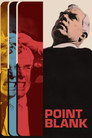
John Boorman is a director I’ve barely scratched the surface of—the only other film of his I’ve seen is Deliverance. By the mid-to-late 1960s, cinema had begun undergoing a transformation, becoming something more violent than what came before. Point Blank, in particular, had long fascinated me, its reputation alone enough to keep it on my radar. Having finally seen it via Criterion’s brand-spanking-new restoration, it’s immediately obvious why it’s regarded so highly. I loved every bit of Boorman‘s esoteric, psychedelic, angry, postmodernist ghost story set in the swingin’ sixties. Lee Marvin’s Walker—a lead of few words—feels less like a human and more like an immovable slab of meat. Walker, quite literally, returns from the dead to exact his vengeance for a paltry sum of money that stops being an objective somewhere along the way and becomes a fixation. Boorman and Marvin bonded over the material, reportedly despising the script they were first handed and reshaping it into something far more formally daring, stripped-down, and bold. For a film this experimental, it needed a strong technical backbone to hold it in place. Philip H. Lathrop’s cinematography is central to Point Blank’s entire force, emphasizing the stark, empty modernist interiors and cold, displaced architecture. The Los Angeles Boorman visualizes here is an impersonal one, indifferent to its inhabitants and their suffering. Ostensibly a hard-boiled crime thriller, Point Blank owes far more to the French New Wave and European modernism than to any standard Hollywood crime pictures at the time. I loved everything about this. Marvin’s near-static performance, Boorman’s surreal and dreamlike direction, Johnny Mandel’s haunting soundscape—Point Blank is one of the most formally distinct films of its era, and it goes straight onto my list of perfect films.