Reviews forConclave
O OSCAR ERA PARA SER SEU!!

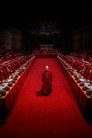
amo esses jogos vorazes de batina, as gente tão bom pense num filme injustiçado do Oscar, sério acho interessante como mostra como nem tudo são flores e como põem realmente se mostrar as verdadeiras faces quando se tem algo a querem tanto, mesmo sendo de pessoas que deveriam ser “santas”, como se mostra realmente a imagem das pessoas desse meio católico (isso vindo de ex coroinha)
In the Name of the Tea, the Gossip, and the Holy Conclave


I need to make a list called "My Friends Won't Stop Recommending Me This Movie" to counteract my own on Letterboxd. In the name of the Father, the Son, and the Holy Spirit, this one was a good one. A great one even, an above average one if I may. I have never been particularly close to the Catholic church, as I was raised in a Christian household who in recent years has stopped going to church and even before, rarely went. However, this film was not only made for door-to-door knocking annoyances or your Catholic grandmother who goes to church everyday and insists everyone around her does the same, it was made with the sinner in mind, that being all of us. People who make mistakes, who doubt, whose faith wavers, whose guilt eats them up inside, and those who strive to be better despite the aforementioned. This is reflected in the Cardinals and their actions throughout the film. I will start with the positives: This film is an aesthetic masterpiece; to put it informally, it's a vibe. The color coordination, the scene framing, the setting, the Catholicistic aura of it all. As someone who has visited and toured the Vatican City, this film captured the energy of the place extremely well. All in all, the cinematography is just stellar. It is truly a mystery as to how or why Ralph Fiennes has not won an Oscar since his first nomination over 30 years ago. He was incredible in this movie and just like his previous roles, he was completely immersed into his character and the story. From his stoic nature while sequestering the Conclave to his quiet breakdown while sitting on the late Pope's bed (or rather, deathbed). It's a seemingly subtle performance that also commands the viewer's attention, giving you a character that you cannot seem to look away from. I hope that his next Oscar nomination will be the one to grant him his win. The ending reveal with the newly appointed Pope Innocent XIV, better known to us as Cardinal Benitez, may seem like a small scene to many, but it is a very powerful scene to me. As the majority knows, the Catholic church is very closely tied to tradition. Cardinal Tedesco may be framed as an extremist figure in the film, but I have met many people who share near-identical mindsets to his. The reveal of Benitez being born as an intersex man challenges the audience to rethink the ways they define sex assignment and if the innate sex of the individual really matters in the long run. Unfortunately, I do not think this is a perfect film. Following the positives with my criticisms: The overall plot of the story is fairly simple: Cardinals must vote on who will be the next Pope to lead their faith; simplicity is not necessarily a bad thing. However, the journey in-between point A and point B were not all that engaging for me. Yes, scandals were uncovered and possible Popes were removed from the candidate list, however I was not very engaged with these reveals, as I found them to be simplistic. Others will enjoy it, but it is simply not for me. Related to the previous point, the Cardinals revealed to be involved in various scandals are pretty shallow characters in the context of the film. Yes, they are shown to be controversial, but I know nothing about any of them as people in order to see their actions in a more nuanced light. For example, when Lawrence confronts Cardinal Adeyami about his previous sexual relationship with Sister Shanumi, he says "you are a good man" in order to comfort him, but the audience has no way of knowing if this is true or not. The only things we know about him are his former inappropriate relationship with a nun and that he wants to imprison homosexuals and see them in Hell afterward. I feel that an extra 30 minutes added to the film's runtime would have benefited its character exploration. This is a minor thing, but I am frustrated with the lack of explanation to explain Cardinal Lawrence's wavering in faith. Was there a specific thing that affected his commitment to God or was it something external that was affecting him? I guess we will never know because the film doesn't bother explaining it to us. Overall, Conclave is an informative, enjoyable, and thought-provoking watch to both Catholics and non-Catholics alike. Despite my issues with the films, I find that it has more to enjoy than flaws I found with it. While I wouldn't name it as one of the best films to watch from 2024 (I personally see Lisan al-Gaib as my Messiah, not Jesus), you would be better off watching it and seeing the magic of filmmaking combine with the uniqueness of Catholicism.
"no sane man would want the papacy"

Reflections on purpose and certainty, an intriguing conflict of doubt and faith where one can't exist without the other yet that's the complexity of it all. Even in the most sacred of places, power can still take hold and that's exactly what makes us human at the end of the day. after all, between morality and sin there's just a fine line to be crossed and no environment is exempt from that. Moreover, the visuals are mesmerizing, from the composition of every scene to the use of light and shadow. one of my favorite films of the year!
🎞 ˒

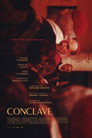
A Igreja não é a tradição. A Igreja não é o passado. A Igreja é o que faremos a partir de agora. Conclave foca na decisão de decidir um novo papa por meio de votações, assim como em eleições para presidência existe discursos para conquista do público, no conclave existe discursos para convencer os Cardinais a votarem em candidatos. O discurso é o principal foco do filme, nos lembra até mesmo a famosa "retórica" dos Sofistas, a verdade era moldavel, tornando até mesma a mentira uma verdade bonita e agradável aos olhos do preconceito. Conclave é atemporal, fala do passado, fala do presente e fala do que acontecerá no futuro se a igreja nunca mudar. As pessoas são claramente influenciáveis e toda a trajetória mostra isso, o discurso de ódio e conservadorismo é empregado e favorecido por mais da metade do filme, e, mesmo com discursos do Cardinal Lawrence e de Bellini, as pessoas se influenciam por o que está na moda, a igreja controla a mente dessas pessoas e implanta nelas a própria verdade, mesmo se essa verdade matar pessoas. Tudo muda quando um novo Cardinal é apresentado a igreja, e, quando um atentado de fora ocorre, o discurso patriarcal atemporal volta para moldar a mente das pessoas na melhor situação: a situação da vulnerabilidade, da perca da fé. Interessante citar a perca da fé, o próprio Cardinal Lawrence repete isso durante o filme, ele quer deixar de ser Cardinal porque está perdendo a fé, não a fé em Deus, mas a fé no que a Igreja representa e o que ocorre dentro dela, ele desmascara os seus candidatos que ao ver do povo, pareciam perfeitos e prometiam ser um bom papa. Há um pecado, que vim a temer mais que todos os outros. Certeza. A certeza é a maior inimiga da unidade. A certeza é a inimiga mortal da tolerância. A verdade que Sócrates pregava chega para derrotar os Sofistas, o novo Cardinal combate o discurso manipulador por um discurso honesto, real, espiritual. A citação supracitada denota essa honestidade, a superação dos males que a Igreja cometeu, quando Deus é representado como uma ferramenta pra controlar as pessoas, o novo Papa mostra que Deus é amor, a fé é boa, a igreja e os discursos devem mudar. O filme se encerra com o novo Papa confessando a Lawrence a verdade sobre si mesmo, a verdade dos ensinamentos de Deus, os ensinamentos distorcidos pela igreja. Ele é intersexo, ia fazer uma cirurgia para tirar o útero, achava que estava pecando e implorava para que o antigo Papa o perdoasse e o retirasse do cargo (a mente influenciada pelo preconceito estrutural justificado pela Bíblia) mas existe um ensinamento que ninguém pôde distorcer sobre a Bíblia. Ame-te como Deus te fez. O novo papa refletiu sobre isso, quando, o papa antigo defendeu isso, e ao aceitar-se, ele é mais crente do que qualquer outro homem conservador que diz ser o canal entre o mundo e Deus. Acima de tudo, o novo Papa sabe que se as pessoas soubessem disso, nunca o declariam Papa, ele sabe dos preconceitos instituidos pela Igreja, ele não olha para trás, ele quer seguir em frente, mudar, superar, moldar o mundo pelas ações e pensamentos bons e honestos. Sou como Deus me fez. E talvez essa diferença me torne mais útil.