Reviews forT-Men
Badges in the Dark

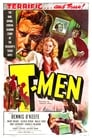
“What’s the matter, you getting the wim-wams?” I first heard of Anthony Mann‘s T-Men through TCM’s introduction to John Cromwell’s Caged—both written by Virginia Kellogg. Mann is a director I greatly admire, particularly his emotionally rich James Stewart westerns. T-Men fits snugly within the semi-documentary crime film movement that proliferated in the wake of WWII—held together by government cooperation and, hilariously, funded by organized crime. Anthony Mann and John Alton take that framework and flood it with caustic noir dread, the sober instructional posture of the police procedural sitting at direct odds with the expressionist stylization drawn from one of the defining visual partnerships of the late 1940s. That tension is precisely why the film is both fondly remembered and considered among Mann’s strongest work from his noir period. Immediately following Reed Hadley’s sleep-inducing narration, Mann drops you into a world of double lives, shadows, and deceit. From the moment Charles McGraw‘s rugged, stony face emerges from what feels like an endless dark void, you know immediately this is something different. Whether confined to enclosed hallways or engulfed in suffocating steam, Alton infuses the picture with an undeniable dark energy that no amount of government-sanctioned narration can fully domesticate. The story works in Mann’s favor too. His films tend to be simple on the surface, with an immense amount of subtle character work underneath, both in how he uses the frame and how he directs his actors. There’s always something going on behind the eyes of his leads—the fear of never seeing loved ones again, the dread of being discovered, the quiet acceptance of defeat, and somewhere beneath all of it, a resolute belief in their own mission. It’s the combination of John Alton‘s technical command and Anthony Mann’s understated direction that makes T-Men stand out from the crowd—proof that a low-budget, government-backed crime picture could be twisted into something visually and psychologically stranger than its premise has any right to suggest.